
How Long Do Sewn-In Hair Extensions Last?
A great sew-in should feel like it was always yours — seamless, comfortable, and easy to forget you're wearing at all. How long that feeling lasts depends on a few things working together: your natural hair growth, the install method your stylist chooses, the quality of the hair itself, and how you care for it at home. There's no single answer, but there is a reliable range, and a clear list of what moves you toward the long end of it.
Already got a sew-in installed?
Get the full washing, drying, and nighttime routine to stretch every install as long as possible.
Quick Answer: Typical Lifespan
Most sew-in installs comfortably last 6 to 10 weeks before a move-up or reinstall is needed. Some clients stretch a fresh install closer to 12 weeks with a slower growth cycle and diligent care; others move up sooner if new growth comes in fast or the scalp needs a break.
It helps to separate two different ideas of "lasting":
- Wear time — how long the install stays secure, comfortable, and free of tension before it needs to be tightened or redone.
- Looking fresh — how long the hair itself continues to blend, move, and photograph the way it did on day one.
A sew-in can technically still be "in" past week 10, but if it's no longer sitting close to the scalp or blending seamlessly, it's no longer doing its job. The goal is always hair that looks like it's always been yours — not hair that's simply still attached.
What Affects How Long a Sew-In Lasts
Your Natural Hair Growth + Scalp Sensitivity
The install is only as stable as the foundation it's built on. As your natural hair grows, the braid pattern or tracks shift away from the scalp, which changes how the extensions sit and how secure they feel. Clients with faster growth cycles typically need a move-up sooner; a sensitive scalp may also call for shorter intervals between installs to avoid unnecessary tension.
Installation Method (Braid Pattern, Beaded Weft, Combo Installs)
A precise, well-executed install is one of the biggest factors in longevity. A properly sized and tensioned braid pattern, a well-placed beaded weft, or a thoughtful combination install all distribute weight evenly and reduce strain on the natural hair underneath. This is where an artist's technique matters as much as the product itself — the same hair installed two different ways can perform very differently over the following weeks.
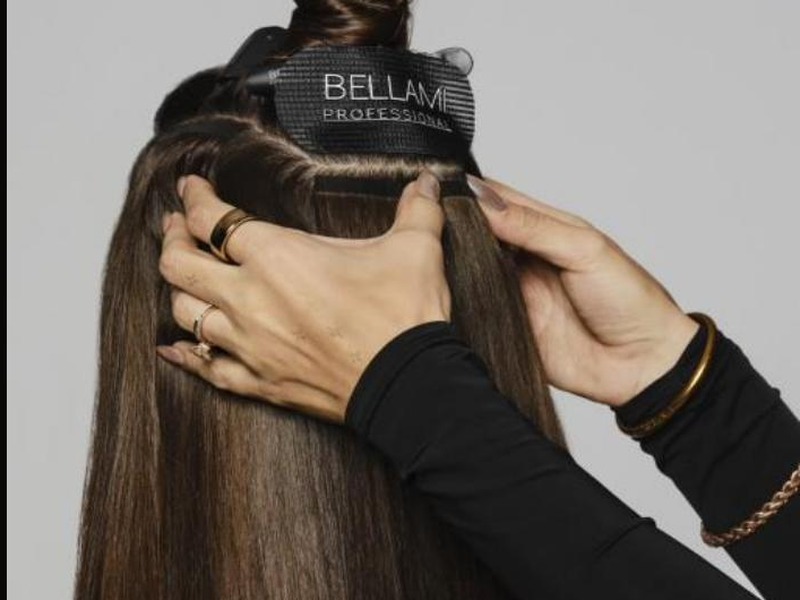
Expert installation, close to the scalp, is one of the biggest factors in how long a sew-in wears comfortably.
Quality of the Hair (Weft Construction + Cuticle Alignment)
Not all wefts are built the same. Hair with aligned cuticles moving in one direction resists tangling and matting far better than hair without it, which means fewer knots at the root and less friction over time. A well-constructed weft — flat, secure, and free of shedding — is engineered to perform through weeks of wear, styling, and daily movement without breaking down.
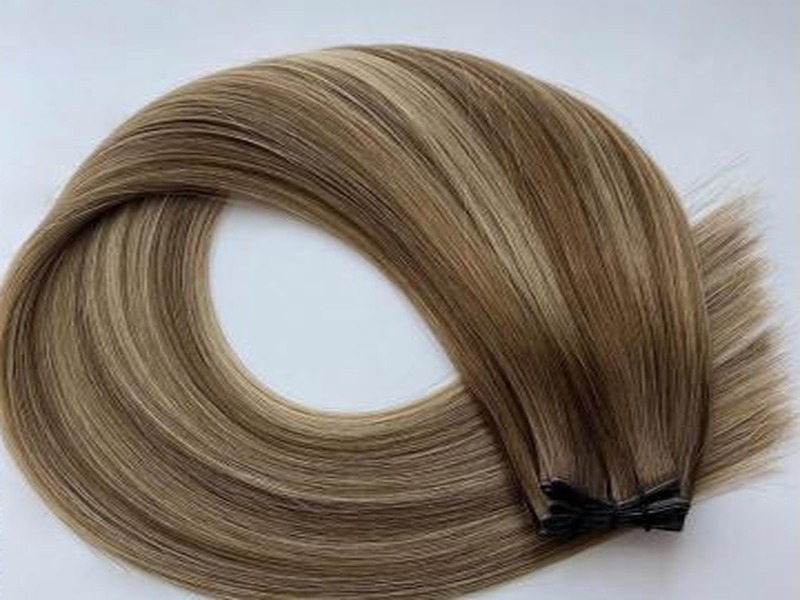
Aligned cuticles and flat, secure weft construction — the foundation of hair that holds up over weeks of wear.
How Many Bundles/Weight Used (Too Heavy Can Reduce Comfort/Wearability)
More hair means more fullness, but weight and wearability go hand in hand. An install with too much hair for the client's natural density can pull at the root, cause discomfort, and shorten how long it feels good to wear — even if the hair itself is holding up fine. The right amount of hair is a personalized decision, built around the client's natural hair, lifestyle, and desired result.
Lifestyle Factors (Workouts, Swimming, Humidity, Heat Styling)
Sweat, chlorine, salt water, humidity, and heat all interact with a sew-in over time. Frequent workouts can loosen tracks faster; swimming and humidity can affect texture and blend; regular heat styling without protection can wear down the hair's integrity. None of these rule out an active lifestyle with extensions — they just mean a slightly more attentive care routine.
How to Make a Sew-In Last Longer (Without Damaging Your Hair)
Daily Basics (Brush Routine, Keep Roots Smooth, Avoid Tugging)
Brush from root to tip using a loop brush or extension-friendly comb, holding the base near the scalp to protect the tracks from tension. Detangle daily — even on non-wash days — to prevent buildup at the root, and always brush before bed and before washing.
Stylist Tip: Section the hair before brushing on days when it feels particularly full. It's faster, gentler, and easier to spot any early matting near the tracks.
Night Routine (Silk/Satin, Braid/Pony Method, Bonnet/Pillowcase)
Friction while you sleep is one of the most avoidable causes of early matting. Loosely braid the hair or gather it into a low, silk-wrapped ponytail before bed, and sleep on a satin or silk pillowcase — or wear a bonnet — to reduce the tugging that happens against cotton overnight.
Washing Schedule (How Often; Focus on Scalp + Gentle Cleansing)
Wash every 7–10 days, focusing shampoo at the scalp where oil and product build up, and letting the suds rinse through the lengths rather than scrubbing them directly. Washing too infrequently can trap buildup at the root; washing too often can add unnecessary stress to the tracks — both extremes shorten wear time.
Conditioning & Moisture (Mid-Lengths/Ends vs. Near the Weft)
Concentrate conditioner and moisture treatments from mid-length to ends, keeping product away from the area closest to the tracks or braid pattern. This keeps the hair soft and manageable while avoiding slippage near the install itself.
Heat Styling Tips (Protectant, Temperature, Reducing Friction)
Always apply a heat protectant before styling, and keep tools on a moderate setting rather than the highest heat available — 100% Virgin Remy hair styles beautifully, but it still deserves the same care as your own. Reducing unnecessary heat exposure day to day preserves shine, movement, and the overall lifespan of the hair.
Signs It's Time to Move Up or Reinstall
A few reliable cues that it's time to see your artist:
- Looseness or slippage in the tracks or braid pattern
- Matting or tangling forming near the root
- Visible tension, tightness, or discomfort at the scalp
- Scalp irritation or itchiness that doesn't resolve with washing
- Tracks or wefts becoming visible as natural hair grows out
Catching these signs early protects both the natural hair underneath and the wefts themselves — giving you more reinstalls out of the same set.
Can You Reuse Weft Hair After a Sew-In?
What Determines Reusability (Care, Tangling, Shedding, Weft Integrity)
Well-cared-for, high-quality wefts are frequently reused for multiple installs. The deciding factors are how well the hair was maintained during wear, how much tangling or shedding occurred, and whether the weft itself — the flat base the hair is attached to — is still secure and intact. Hair with aligned cuticles and minimal heat damage tends to have the longest reuse life.
How to Prep Wefts for Re-Install
Before a weft goes back in, it should be gently detangled from ends to root, cleansed and conditioned, and inspected for any thinning, shedding, or loose wefting. A quick trim on the ends refreshes the look and removes any wear from the previous install. This is a step best left to a professional, who can assess whether the hair is ready to go back in — or if it's reached the end of its lifespan.
Want more reinstalls out of the same set?
Our full care guide covers washing, drying, heat styling, and storage — the routine behind reusable, long-lasting wefts.
Sew-In vs. Other Extensions: Longevity at a Glance
- Sew-Ins typically last 6–10 weeks per install and are well suited to clients wanting longer wear between appointments and added durability for fuller, more voluminous looks.
- Tape-Ins generally need to be moved up every 6–8 weeks, sitting flatter against the scalp for a more seamless, low-profile enhancement.
- Clip-Ins offer no wear commitment at all — they go in and out the same day, ideal for a temporary volume or length change.
Each method serves a different need in the chair, from long-term transformation to a same-day "pick me up." (Read our full comparison for a deeper look at which install method fits your hair goals.)
FAQ
How often should you get a sew-in tightened/moved up?
Most clients move up every 6–10 weeks, depending on natural hair growth and how the install is holding at the root.
Do sew-ins damage your hair?
A properly sized, well-installed sew-in — cared for at home and maintained on schedule — should not damage healthy hair. Damage typically comes from tension that's too tight, installs left in too long, or a weight of hair that doesn't match the client's natural density.
Can you wash your hair with a sew-in?
Yes. Washing every 7–10 days with a focus on gentle scalp cleansing keeps both the natural hair and the extensions healthy throughout the install.
How do you sleep with a sew-in?
Loosely braid the hair or secure it in a low ponytail before bed, and sleep on a silk or satin pillowcase — or wear a bonnet — to minimize friction and protect the install overnight.


